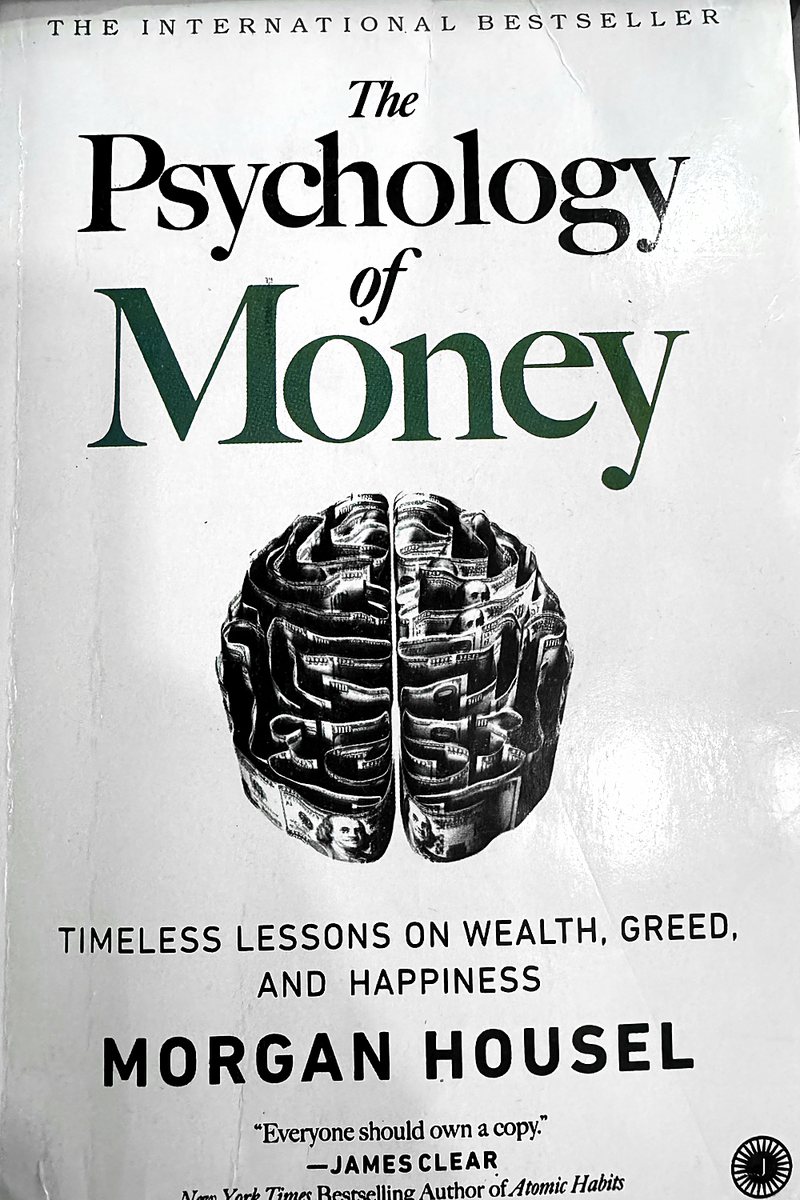
The Psychology of Money, and why behaving well beats being clever
Morgan Housel’s argument is simple and a little uncomfortable: how you act with money matters more than how much you know about it. These are the ideas worth keeping.
- Best for
- Anyone who earns, saves or invests, especially early in their career
- Big idea
- Behaviour beats knowledge when it comes to money
The book in 60 seconds
- Everyone’s money decisions make sense to them, because they are shaped by what they lived through.
- Compounding rewards time far more than talent, so the biggest edge is staying invested for longer.
- Getting rich and staying rich need different skills: the first takes risk, the second takes caution.
- Real wealth is mostly invisible. It is the money you did not spend.
- Leave room for error. Savings and patience let you survive the plans that go wrong.
Most personal finance books assume you are a spreadsheet. Put in the right numbers, apply the right formula, and wealth follows. Housel starts from the opposite end. He treats money as something people do rather than something they calculate, and that is why the book works so well for readers who have never opened a finance textbook.
1. Nobody is crazy with money
Someone who started earning during a crash will think about risk very differently from someone who started in a boom. Neither is irrational. Each is reacting to the first version of the world they saw. Housel’s point is that we judge other people’s money decisions without knowing the experiences behind them.
This will feel familiar to many Indian families. Parents who lived through scarce jobs and expensive loans often trust gold, land and fixed deposits. Their children, who grew up with UPI and investing apps, see risk through a different lens. Both are following the same instinct: protect yourself from what you learned to fear.
The goal is not to find the smartest strategy. It is to find one you can stick with when it stops feeling smart.
2. Time does the heavy lifting
Compounding is easy to understand and hard to live with. For years the growth looks small and slow, and most people quit during that boring stretch. Housel argues that the investors who did best were often not the most brilliant ones, but the ones who stayed in the game the longest.
3. Wealth is what you don’t see
An expensive car tells you what someone spent, not what they have. The money that buys freedom is the money left unspent and invested, which by definition nobody can see. That makes it very easy to confuse looking rich with being rich.
4. Leave room for error
Plans rarely go exactly as written. Housel’s answer is not a better forecast but a wider margin: savings you don’t touch, debt you can carry in a bad year, and enough patience to wait out the misses. Room for error is what stops one mistake from becoming the end of the story.
Should you read it?
Yes, if you want a calm, story-driven book that changes how you think about risk and saving. Skip it if you are looking for stock tips or a step-by-step investing plan. This book is about behaviour, not tactics.
I ask ‘but why?’ for a living, then write down the answers.
This summary is my own reading of the book, written for education. It is not investment advice. The ideas belong to the author; buy the book to read them in full.